Top Tourist Attractions in Mumbai: 15 Iconic Landmarks and Hidden Gems
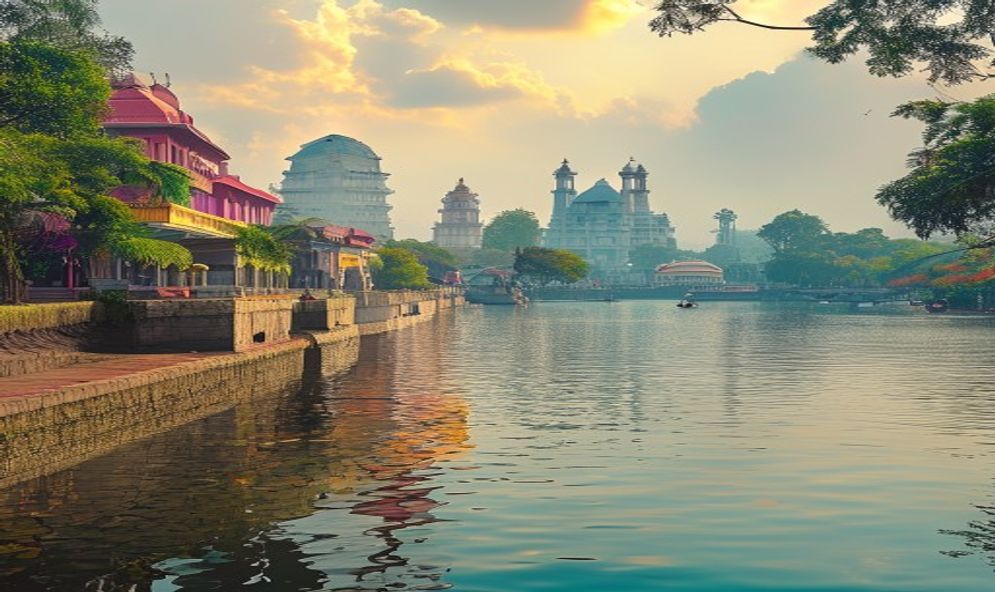
Mumbai is a city that needs no introduction. As the financial, commercial, and entertainment capital of India, it draws millions of visitors every year who come to experience its unique blend of history, culture, and modernity. The city\u2019s tourist attractions range from world-famous landmarks that feature on postcards to hidden gems that only locals know about, from colonial-era buildings that tell the story of the British Raj to contemporary structures that represent India\u2019s march into the future.
I have spent years exploring Mumbai\u2019s tourist attractions, both as a resident and as a traveler discovering the city anew. What I have learned is that Mumbai rewards those who take the time to look beyond the surface. The famous landmarks are famous for a reason, but the true magic of the city lies in the unexpected discoveries \u2014 the quiet temple tucked away in a busy market, the street art mural that transforms a dull wall, the rooftop restaurant that offers a stunning view of the skyline. These are the experiences that make Mumbai more than just a destination \u2014 they make it a journey.
In this comprehensive guide, I will take you through the top tourist attractions in Mumbai, covering both the must-see landmarks and the lesser-known spots that deserve more attention. Each entry includes practical information, personal insights, and tips to help you make the most of your visit. Whether you are in Mumbai for a weekend or a month, this guide will help you experience the best that the city has to offer.
Gateway of India: Mumbai\u2019s Most Famous Landmark

The Gateway of India is the face of Mumbai. Built in 1924 to commemorate the visit of King George V and Queen Mary, this 26-meter-high basalt archway stands at the water\u2019s edge in the Colaba district, overlooking the Arabian Sea. The architecture is a unique blend of Hindu and Muslim styles, with intricate lattice work, ornamental details, and a central dome that rises majestically above the structure. The Gateway has been the witness to many historic moments, most notably the departure of the last British troops from India in 1948, which marked the end of colonial rule.
Today, the Gateway of India is the starting point for most tourists exploring Mumbai. The area is always buzzing with activity \u2014 photographers capturing the perfect shot, street vendors selling balloons and corn, families enjoying ice cream, and tourists boarding ferries to Elephanta Island. The Taj Mahal Palace Hotel, standing across the road, provides a stunning backdrop that completes the picture. The best time to visit is early morning, when the crowds are thin and the light is perfect for photography. Alternatively, visit in the evening when the monument is illuminated and the waterfront is alive with activity.
The Gateway of India is more than just a tourist attraction \u2014 it is the symbol of Mumbai itself. Standing before it, you can feel the weight of history and the pulse of the city. The monument is free to visit and open 24 hours, but the ferry services to Elephanta Caves operate only during daylight hours. Give yourself at least 30 minutes to explore the area and take photographs. The Gateway is located in South Mumbai, within walking distance of several other attractions including the Colaba Causeway market and the Chhatrapati Shivaji Maharaj Vastu Sangrahalaya museum.
Marine Drive: The Queen\u2019s Necklace
Marine Drive is a 3.6-kilometer-long boulevard that curves along the western coast of South Mumbai, connecting Nariman Point to Girgaum Chowpatty. It is famous for its stunning Art Deco buildings, the panoramic view of the Arabian Sea, and the spectacular sight of the street lights at night that give it the nickname Queen\u2019s Necklace. The Art Deco buildings that line Marine Drive constitute the second-largest collection of Art Deco architecture in the world, after Miami, and the area has been designated as a UNESCO World Heritage Site.
The Marine Drive promenade, known locally as the sea face, is where Mumbaikars come to unwind. Joggers navigate through the evening crowds, couples sit on the seawall watching the sunset, street vendors sell bhel puri and ice cream, and the entire stretch hums with a gentle energy that is uniquely Mumbai. The sunset view from Marine Drive is legendary \u2014 the sky turns shades of orange, pink, and purple, with the silhouettes of palm trees and Art Deco buildings creating a scene that is both romantic and inspiring. I have watched this sunset hundreds of times, and it never looks the same twice.
The best time to experience Marine Drive is in the evening, from about 5 PM to 8 PM. Start at Girgaum Chowpatty and walk south towards Nariman Point, taking in the views and the atmosphere. The walk takes about 40 minutes at a leisurely pace. The Marine Drive area is also home to several excellent restaurants, bars, and cafes, making it a perfect destination for an evening out. The promenade is free and accessible to all. For the best photographs, visit during the golden hour before sunset or after dark when the Queen\u2019s Necklace is lit up.
Elephanta Caves: A UNESCO World Heritage Site

The Elephanta Caves, located on Elephanta Island in the Mumbai Harbor, are a UNESCO World Heritage Site that dates back to the 5th to 7th centuries. These rock-cut cave temples were carved out of solid basalt rock by Buddhist and Hindu monks and feature some of the most exquisite sculptures in Indian history. The main cave, dedicated to Lord Shiva, contains the famous Trimurti \u2014 a 20-foot-tall three-headed bust representing Shiva as the creator, preserver, and destroyer. The carving is considered one of the finest examples of Indian sculpture.
To reach the caves, you need to take a ferry from the Gateway of India. The one-hour ferry ride offers stunning views of the Mumbai skyline and harbor. Once on the island, you can walk 1.5 kilometers through a forested path or take a miniature train to the caves. The main cave features a large hall with intricately carved pillars, while smaller caves house additional sculptures and carvings. The site is remarkably well-preserved, considering its age and exposure to the elements. The craftsmanship of the ancient artisans is awe-inspiring.
The Elephanta Caves are open Tuesday to Sunday, 9 AM to 5 PM (closed on Mondays). The best time to visit is during the winter months, from November to February, when the weather is pleasant. Carry water, wear comfortable shoes, and be prepared for a moderate walk. The caves require a significant amount of walking, and the terrain can be uneven. The combination of history, art, and the scenic ferry ride makes this one of the top tourist attractions in Mumbai. It is a full-day excursion that offers a glimpse into India\u2019s rich cultural heritage.
Chhatrapati Shivaji Maharaj Terminus: A Gothic Marvel

Chhatrapati Shivaji Maharaj Terminus, formerly known as Victoria Terminus, is one of the most magnificent buildings in India. Designed by Frederick William Stevens and completed in 1887, this UNESCO World Heritage Site is a masterpiece of Victorian Gothic Revival architecture, with influences from Indian architectural traditions. The building features a stunning central dome, pointed arches, turrets, spires, stained glass windows, and intricate stone carvings that make it a visual feast for architecture lovers.
The station is not just a historical monument but a fully functional railway station that handles over 3 million passengers daily. Watching the organized chaos of commuters rushing through the grand halls, with the stunning architecture as a backdrop, is an experience that captures the spirit of Mumbai. The best view of the building is from the outside, where you can appreciate the full grandeur of the facade. The interior is equally impressive, with high vaulted ceilings, ornate woodwork, and stained glass panels depicting scenes from Indian history.
CST is located in the Fort district of South Mumbai, within walking distance of the Gateway of India and several other attractions. The best time for photography is late morning when the sunlight illuminates the main facade. The station is open 24 hours, and entry is free. It is a working railway station, so be mindful of the crowds and the trains. The station is also the headquarters of the Central Railway and serves as the terminus for several important long-distance trains, including the Rajdhani Express and the Deccan Queen.
Haji Ali Dargah: A Spiritual Landmark in the Sea
The Haji Ali Dargah is one of Mumbai\u2019s most iconic spiritual landmarks. Located on a small islet off the coast of Worli, this mosque and dargah (shrine) was built in 1431 in memory of the wealthy Muslim merchant turned saint, Sayyed Peer Haji Ali Shah Bukhari. The structure is a stunning example of Indo-Islamic architecture, with white minarets and domes that seem to float on the Arabian Sea. During high tide, the causeway connecting the dargah to the mainland is submerged, cutting off the shrine from the city and creating a dramatic visual effect.
The Dargah is accessible via a narrow causeway that is about a kilometer long. Walking to the shrine, with the sea on both sides and the Mumbai skyline in the background, is an experience in itself. The interior of the dargah is simple but atmospheric, with marble floors, intricate mirror work, and the tomb of the saint at the center. The energy inside is deeply spiritual, with devotees offering prayers and seeking blessings regardless of their faith. The Dargah is particularly beautiful during sunset, when the setting sun paints the white structure in golden hues.
The Haji Ali Dargah is open to visitors of all faiths and is free to enter. The best time to visit is during the evening, around sunset, when the causeway is less crowded and the lighting is magical. The Dargah is located in Worli, about 15 minutes from the city center. Dress modestly, remove your shoes before entering, and be prepared for large crowds during weekends and religious festivals. The Haji Ali Dargah is not just a religious site \u2014 it is a symbol of Mumbai\u2019s pluralistic spirit and a must-visit for anyone exploring the city\u2019s cultural landmarks.
Conclusion: Mumbai\u2019s Attractions Await
Mumbai\u2019s tourist attractions offer a journey through centuries of history, culture, and architectural splendor. From the iconic Gateway of India to the spiritual Haji Ali Dargah, from the ancient Elephanta Caves to the magnificent Chhatrapati Shivaji Terminus, each attraction tells a unique story of this remarkable city. Whether you are a first-time visitor or a seasoned traveler, Mumbai\u2019s landmarks never cease to inspire and amaze.
What makes Mumbai special is not just its famous attractions but the way they are woven into the fabric of daily life. The Gateway is not just a monument but a gathering place for families and friends. CST is not just a station but a symbol of the city\u2019s relentless motion. Haji Ali is not just a shrine but a testament to Mumbai\u2019s inclusive spirit. These are not places to be checked off a list but experiences to be savored and remembered.
So take your time exploring Mumbai\u2019s tourist attractions. Walk slowly, look closely, and allow yourself to be surprised. The city has a way of revealing its magic to those who are patient and observant. From the grand landmarks to the hidden corners, Mumbai is waiting to be discovered, one attraction at a time.