Kailash Mansarovar Mystery: Shiva Abode
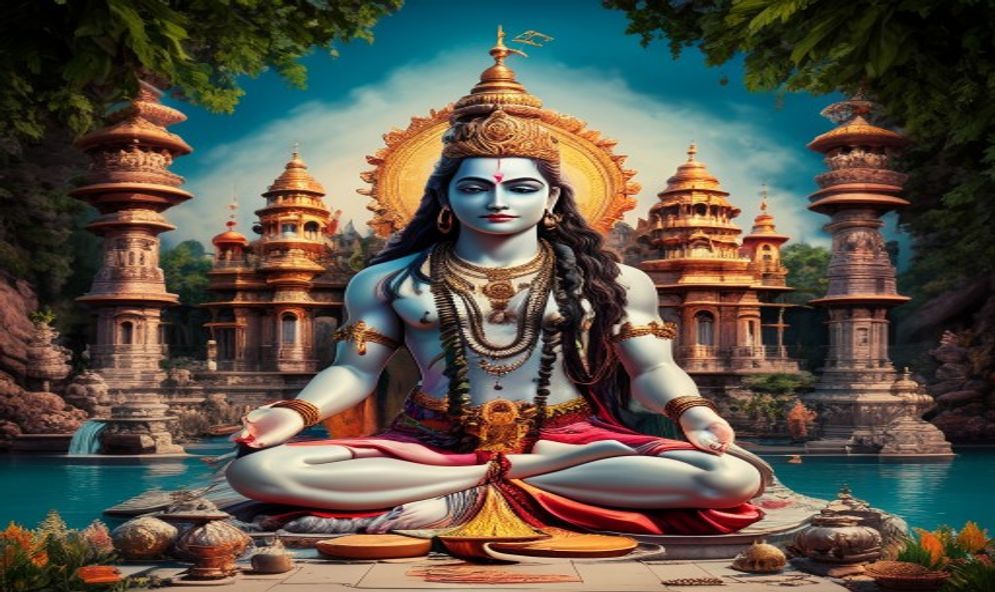
Mount Kailash - The Mysterious Abode of Shiva
Mount Kailash, standing at 6,638 meters (21,778 feet) in the remote Tibetan region of the Himalayas, is considered the earthly abode of Lord Shiva. But Kailash is far more than just a mountain - it is a profound spiritual mystery that has baffled scientists, explorers, and pilgrims for centuries. Unlike any other mountain on Earth, Mount Kailash has never been climbed. Despite numerous expeditions by experienced mountaineers, the mountain remains unconquered - not because it is technically difficult, but because something deeper prevents climbers from reaching its summit. The mountain is sacred to four religions: Hinduism, Buddhism, Jainism, and the indigenous Bon religion. For Hindus, it is the home of Shiva and Parvati. For Buddhists, it is the dwelling of Demchok (Chakrasamvara), a wrathful deity. For Jains, it is the site where the first Tirthankara, Rishabhadeva, attained liberation. For Bonpos, it is the seat of the sky goddess Sipaimen. This universal reverence makes Kailash one of the most sacred places on Earth. The Kailash Mansarovar pilgrimage is considered the ultimate spiritual journey, one that transforms the soul and grants liberation from the cycle of birth and death.
The Geographical Mystery
Mount Kailash is located in the Ngari Prefecture of Tibet, near the source of four major rivers: the Indus, the Sutlej, the Brahmaputra, and the Karnali. The fact that four major rivers originate from this single mountain region is considered significant. The shape of the mountain is almost perfectly pyramidal, with four faces roughly aligned to the cardinal directions. When the sun hits the mountain at certain angles, the shadows create a swastika pattern - an ancient symbol of auspiciousness. Geologists have noted that Mount Kailash is not a typical Himalayan peak. Its distinct pyramid shape is unusual, and the mountain appears to have a layered, almost man-made structure from certain angles. Some have even speculated that Kailash could be an ancient pyramid, though mainstream science rejects this theory. What is certain is that the mountain has a unique electromagnetic field. Pilgrims and researchers have reported that compasses behave erratically near Kailash, and time seems to pass differently. Some pilgrims report that hair and nails grow faster during the Kailash parikrama (circumambulation), which scientists attribute to the high altitude and low oxygen. But locals and pilgrims attribute it to the spiritual energy of the mountain.
The Mystery of Mount Kailash - Why It Has Never Been Climbed
Perhaps the greatest mystery of Mount Kailash is that it remains unclimbed. In the 20th century, several mountaineering expeditions attempted to summit Kailash. In the 1920s, British mountaineer Hugh Ruttledge attempted the climb but found the mountain unnerving and his porters refused to continue. In the 1930s, a German expedition led by Gunter Dyhrenfurth likewise failed. In the 1980s, the Chinese government granted permission for a climbing expedition. This expedition, led by the famous Italian mountaineer Reinhold Messner, studied the mountain but eventually withdrew. Messner later said that climbing Kailash would be like "climbing over a prayer wheel" - deeply disrespectful to the spiritual traditions that revere the mountain. There are also strange reports about those who attempted to climb Kailash. Expeditions that tried to scale the mountain reported unusual weather changes, extreme fatigue, and psychological disturbances. Some elderly Tibetans tell stories of climbers who aged rapidly after returning from Kailash. While these stories may be apocryphal, they highlight the spiritual reverence that surrounds the mountain. In 2001, the Chinese government officially banned all climbing attempts out of respect for the religious sentiments of the four faiths. Since then, Kailash has remained untouched by human feet at its summit, preserving its pristine spiritual energy.
Lake Mansarovar - The Lake of Consciousness
At the foot of Mount Kailash lies Lake Mansarovar, one of the highest freshwater lakes in the world at an altitude of 4,590 meters. The name Mansarovar comes from Sanskrit - "Manas" meaning mind or consciousness, and "Sarovar" meaning lake. According to Hindu mythology, the lake originated in the mind of Brahma, the creator. It is considered the lake of consciousness itself. Lake Mansarovar is round, calm, and crystal clear. Its serene waters reflect the image of Mount Kailash, creating a scene of breathtaking beauty. The water is said to have healing properties. Pilgrims who bathe in Mansarovar believe their sins are washed away. Scientific analysis has shown that the water of Mansarovar is exceptionally pure with unique mineral composition. The lake never freezes completely despite the freezing temperatures, and it remains calm even when strong winds blow across the Tibetan plateau. Nearby is Lake Rakshastal, a saltwater lake that is dark and stormy. Rakshastal is considered the lake of demons (Rakshasas), contrasting with the divine Mansarovar. The two lakes are connected by a narrow channel, but their waters never mix completely. This geographical phenomenon is seen as a symbol of the coexistence of good and evil, purity and impurity, in the universe.
The Kailash Parikrama - The Circumambulation
The circumambulation (parikrama or kora) of Mount Kailash is one of the most challenging pilgrimages in the world. The full circuit is approximately 52 kilometers (32 miles) and takes three days to complete. Pilgrims walk at altitudes between 4,600 and 5,600 meters (15,000 to 18,500 feet), crossing the Dolma La pass at 5,636 meters. The journey is physically demanding - the high altitude, thin air, rocky terrain, and unpredictable weather test even the fittest pilgrims. Yet every year, thousands of devotees undertake this journey, believing that a single circumambulation washes away the sins of a lifetime. The parikrama begins at the village of Darchen. On the first day, pilgrims walk along the southern face of Kailash to the Dirapuk Monastery. The second day involves the most challenging part - crossing the Dolma La pass. At the top of the pass, pilgrims hang prayer flags and make offerings to the deities. The third day descends to Zutulphuk, where footprints of Milarepa, the great Buddhist yogi, are preserved in a cave. Tibetan Buddhists believe that completing the kora 13 times grants special spiritual merit. Some even do prostrations (full body-length bows) for the entire 52-kilometer circuit, which takes weeks or months to complete.
Spiritual Significance and Mythological Stories
In Hindu mythology, Mount Kailash is not just a mountain - it is the axis mundi, the center of the universe. According to the Puranas, Mount Kailash (or Meru, which is sometimes identified with Kailash) is the cosmic pillar around which all celestial bodies revolve. On this mountain, Shiva sits in eternal meditation, his trishul planted in the snow, his damaru creating the rhythm of the universe. The Bhagavata Purana describes Kailash as a mountain of crystal surrounded by forests of sandalwood and flowers. The mountain is said to have been placed there by Vishnu as the seat of Shiva. There is a beautiful story about how Kailash became Shiva abode. Once, a dispute arose between Brahma and Vishnu about who was greater. To settle their pride, Shiva appeared as a pillar of light with no beginning and no end. Brahma and Vishnu could not find its limits. Humiliated, they both apologized to Shiva. Shiva then told them that he would reside on Mount Kailash, which would be a place where devotees could find him. Since then, Kailash has been the most sacred pilgrimage site for Shaivites. Another famous story involves Ravana and Kailash. Ravana, the demon king of Lanka, tried to lift Mount Kailash with his twenty arms. The mountain shook terribly, frightening Parvati. Shiva, without opening his eyes from meditation, simply pressed his big toe on the mountain, trapping Ravana underneath. Ravana then sang the Tandava Stotram, and pleased by his devotion, Shiva released him and gave him the Chandrahasa sword.
The Pilgrimage Experience
Undertaking the Kailash Mansarovar pilgrimage is a life-transforming experience. The journey to Kailash is long and difficult. Pilgrims typically travel through Nepal, crossing into Tibet, or through the Lipulekh Pass from India. The journey takes about 15 to 20 days total, with the actual parikrama taking three days. The altitude is the biggest challenge - many pilgrims suffer from altitude sickness and must be evacuated. But those who complete the pilgrimage describe an indescribable peace. Many report feeling the presence of Shiva throughout the journey. Some see visions, others hear the sound of the damaru in the wind. The cold, the exhaustion, the physical suffering - all of it becomes a form of tapasya (austerity) that purifies the soul. When pilgrims first see Mount Kailash from the Yamadwar (the gate of Yama, the god of death), it is a moment of profound emotional release. Many break down in tears. The sight of the mountain, with Mansarovar at its base, is considered the closest one can come to seeing the divine in physical form. For those who cannot make the physical journey, meditation on Kailash is recommended as an alternative. Even visualizing Mount Kailash and Lake Mansarovar is considered spiritually beneficial. Many Hindu households keep images of Kailash Mansarovar in their prayer rooms. Whether the mystery of Kailash is ever fully explained or remains forever veiled, one thing is certain - this mountain touches something deep in the human soul. It reminds us that there are still places on Earth where the divine seems tangible, where the boundary between the physical and spiritual becomes thin. Kailash is not just a mountain - it is Shiva himself, frozen in meditation, waiting for the day when all souls will find their way home to him. Har Har Mahadev!