Goddess Saraswati: Knowledge, Music and Arts
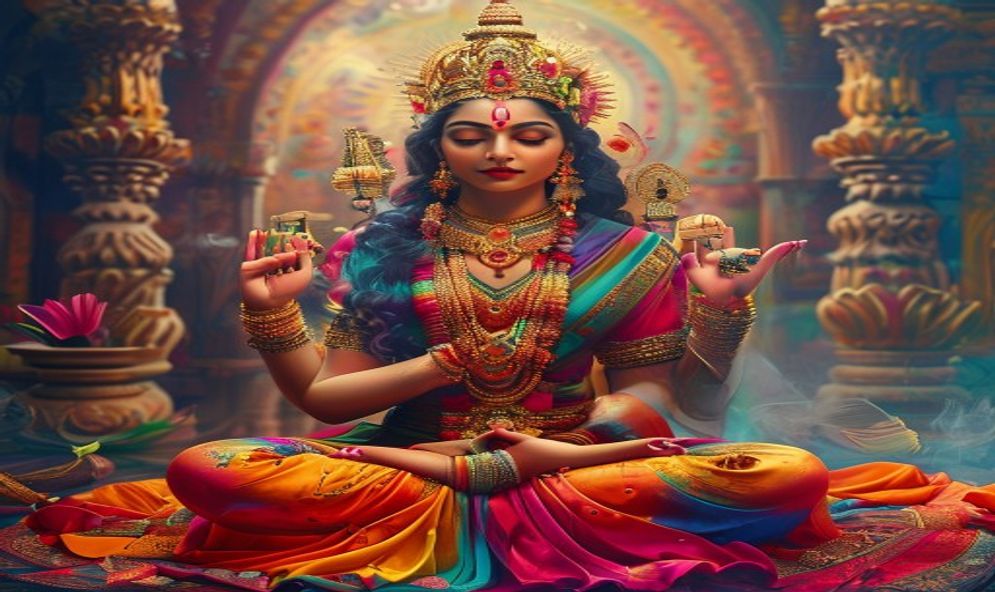
Goddess Saraswati - Maa Saraswati, The Goddess of Knowledge
Goddess Saraswati, revered as Maa Saraswati, is the Hindu deity of knowledge, wisdom, music, arts, and learning. She is the consort of Lord Brahma, the creator of the universe, and represents the creative intelligence that brings order to chaos. In Sanatan Dharma, Saraswati is not just a goddess to be worshiped but the very embodiment of vidya (knowledge) in all its forms - academic learning, artistic expression, musical talent, and spiritual wisdom. Her name literally means the flowing one, referring to both the flow of knowledge and the ancient Saraswati River. She is particularly worshiped by students, teachers, artists, musicians, and writers who seek her blessings for success in their creative and intellectual endeavors.
The Birth of Saraswati - From Brahma Mind
According to the Puranas, when Lord Brahma was creating the universe, he felt that something was missing. The creation was orderly but lacked the beauty and grace that would make it meaningful. From his divine consciousness, Brahma created Saraswati, who immediately appeared seated on a white lotus, holding a veena and a book. She began to play the veena, and the sweet sounds of her music brought harmony to all of creation. The alphabet emerged from her divine vibrations, giving humans the ability to communicate and record knowledge. With Saraswati presence, Brahma creation became beautiful, meaningful, and complete. This story teaches us that knowledge and art are not separate from creation - they are essential elements that make life worth living.
Iconography - Veena, Books, Swan and Peacock
Every element of Goddess Saraswati iconography carries profound meaning. She is depicted wearing a pure white saree, symbolizing the purity of true knowledge. She holds a veena, the stringed musical instrument, representing the harmony of all arts and sciences. The veena reminds us that knowledge must be expressed creatively to be complete. In one of her four hands, she holds a book (usually the Vedas or a palm leaf manuscript), representing the accumulated wisdom of humanity. Another hand holds a rosary (akshamala), symbolizing the continuous flow of knowledge and the meditative aspect of learning. Her third hand is shown in the varada mudra (blessing gesture), indicating that knowledge is a blessing to be shared.
Saraswati vahana (vehicle) is the white swan (hamsa). The swan has a remarkable ability - it can separate milk from water, symbolizing the power of discrimination that true knowledge provides. A wise person, like the swan, can separate truth from falsehood. The swan also represents the purified soul that has attained self-realization. Sometimes Saraswati is also shown with a peacock near her. The peacock, with its beautiful but proud feathers, represents the arts and the potential for vanity in artistic expression. Saraswati association with the peacock reminds artists to remain humble and use their talents for higher purposes rather than ego. The white color of her attire, the lotus she sits on, and the calm expression on her face all emphasize that true knowledge brings peace, purity, and spiritual elevation.
Vasant Panchami - Saraswati Birthday
Vasant Panchami, celebrated on the fifth day of the bright fortnight of Magha month, is considered the birthday of Goddess Saraswati. This festival marks the beginning of spring (Vasant Ritu) and is dedicated to learning and the arts. On this day, children are introduced to the alphabet for the first time in a ceremony called Aksharabhyasam or Vidyarambham. Students place their books and instruments before Saraswati idol for blessings. Schools and colleges organize special pujas. The color yellow dominates the celebrations - people wear yellow clothes, offer yellow flowers and sweets to the goddess, and the entire atmosphere is filled with joy and anticipation of new beginnings. In West Bengal, Vasant Panchami is a major festival with huge Saraswati idols being worshiped in pandals.
The festival has a beautiful significance - just as spring brings new life to nature, Vasant Panchami brings new knowledge to the mind. It is considered an auspicious day to start learning a new skill, instrument, or language. Many musicians give their first public performances on this day. The festival reminds us that learning is a lifelong journey and that every day is an opportunity to gain new wisdom. Schools remain closed, but students visit temples to seek blessings for their studies. In many parts of India, kite flying is also associated with Vasant Panchami, symbolizing the soaring of knowledge and aspirations.
Saraswati Puja Vidhi
The worship of Maa Saraswati follows a specific ritual. Before the puja, devotees clean their study area and arrange their books and instruments near the idol or picture. The puja begins with the invocation of Ganesha, followed by the Kalash Sthapana (establishing the sacred pot). The idol is bathed with water, milk, yogurt, ghee, honey, and sugar (panchamrita). Fresh yellow or white flowers are offered. Incense sticks and ghee lamps are lit. The most important offering is of alphabets written on a slate or paper, representing the beginning of learning. Sweets made from milk and sugar, particularly kheer and peda, are offered as bhog. The Saraswati Stotram and Saraswati Chalisa are recited. After the aarti, prasad is distributed and the devotees seek forgiveness for any mistakes in the puja.
Significance of Knowledge in Hindu Culture
In Hindu culture, knowledge is considered the highest form of wealth. The ancient saying Vidya Dhanam Sarvadhanam Pradhanam means the wealth of knowledge is the greatest of all wealths. The Upanishads repeatedly emphasize that while material wealth is temporary, knowledge of the self is eternal. Saraswati worship reflects this philosophy - she is honored not for material benefits but for the enrichment of the mind and soul. The guru-shishya tradition in India placed the pursuit of knowledge above all worldly concerns. Students lived in their guru ashrams, serving the teacher and learning not just academic subjects but life skills and spiritual wisdom. This tradition produced some of the greatest thinkers, mathematicians, astronomers, and philosophers in human history.
Famous Saraswati Temples
Several famous temples dedicated to Maa Saraswati exist across India. The Saraswati Temple in Koothanur, Tamil Nadu, is one of the most famous and is believed to be over 5000 years old. The Sharada Temple in Sringeri, Karnataka, is one of the four cardinal mathas established by Adi Shankaracharya and is dedicated to Saraswati in her form as Sharada. The Sharda Temple in Kashmir, though now in ruins, was once a great center of learning. The Basara Saraswati Temple in Telangana is one of the two famous Saraswati temples in South India. In Bali, Indonesia, the Pura Taman Saraswati temple demonstrates how Saraswati worship has spread beyond India. These temples are not just places of worship but centers of cultural and educational activities, preserving the tradition of knowledge for future generations.
Goddess Saraswati is the eternal flow of knowledge that has nurtured human civilization for millennia. By worshiping Maa Saraswati, we connect with the divine source of all learning and creativity. Whether you are a student preparing for exams, an artist seeking inspiration, or a spiritual seeker looking for wisdom, Saraswati grace is available to all who approach her with sincerity. Let us honor the goddess of knowledge by committing ourselves to lifelong learning and the pursuit of truth. Om Aim Saraswatyai Namah!