Best Places to Visit in Mumbai: 15 Must-See Attractions for Every Traveler
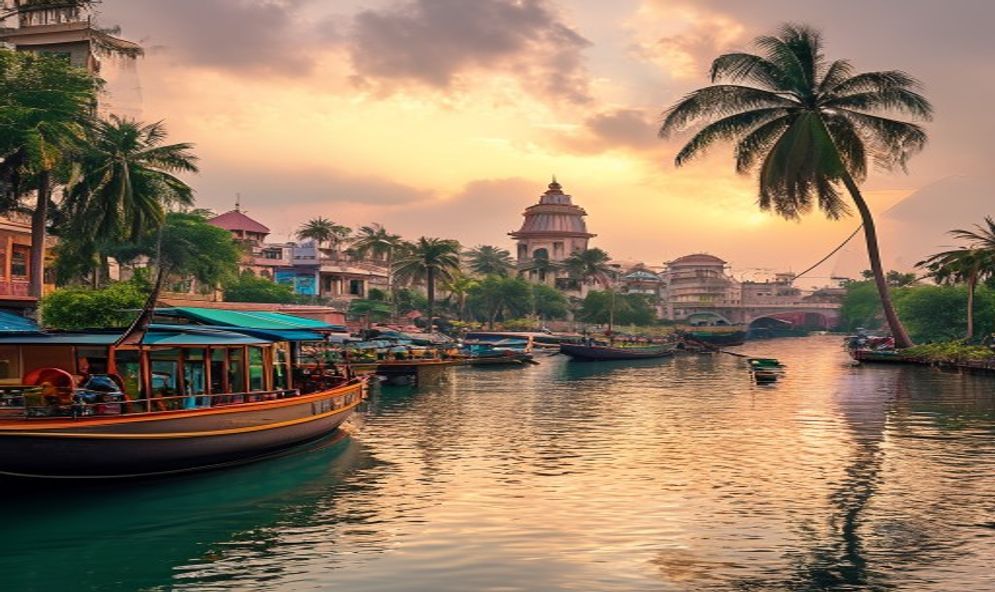
Mumbai \u2014 the city of dreams, the financial capital of India, and a place that pulses with an energy unlike any other city in the world. From the iconic Gateway of India standing proudly at the water\u2019s edge to the serene Marine Drive curving along the Arabian Sea, Mumbai is a city of contrasts where colonial architecture meets modern skyscrapers, where luxury boutiques sit next to street-side stalls, and where the pace of life is matched only by the warmth of its people. I have called Mumbai home for over a decade, and I still discover something new every time I step out to explore.
This city has a way of getting under your skin. The chaos somehow makes sense, the crowds become part of the experience, and the constant motion becomes a rhythm that you learn to move with. Whether you are visiting Mumbai for the first time or have lived here your entire life, there is always a new neighborhood to explore, a new restaurant to try, or a new viewpoint to discover. The city\u2019s energy is infectious, and its diversity is its greatest strength. From the colonial-era architecture of the Fort district to the tranquil gardens of Malabar Hill, from the bustling markets of Colaba to the serene beaches of the suburbs, Mumbai offers an endless array of experiences.
In this guide, I will take you through fifteen of the best places to visit in Mumbai. These are spots that I have personally explored, loved, and returned to multiple times. They represent the best of what Mumbai has to offer \u2014 its history, its culture, its food, and its indomitable spirit. Whether you are a tourist planning your first visit or a local looking to rediscover your city, this guide will help you experience Mumbai at its best.
Gateway of India: The Iconic Landmark
The Gateway of India is not just Mumbai\u2019s most iconic landmark \u2014 it is a symbol of the city itself. Built in 1924 to commemorate the visit of King George V and Queen Mary to India, this massive archway stands 26 meters tall at the waterfront in the Colaba district. The architecture is a blend of Hindu and Muslim styles, with intricate lattice work and ornamental details that reflect the rich cultural heritage of India. The Gateway has witnessed some of the most significant events in Indian history, including the departure of the last British troops in 1948.
Today, the Gateway of India is the starting point for most visitors exploring Mumbai. The area around the monument is always bustling with activity \u2014 photographers capturing the perfect shot, families enjoying ice cream from nearby stalls, vendors selling balloons and souvenirs, and boats departing for Elephanta Island just offshore. The view of the Arabian Sea from the Gateway is spectacular, especially during sunset when the sky turns shades of orange and gold. The Taj Mahal Palace Hotel, standing proudly across the road, adds to the grandeur of the setting.
I never tire of visiting the Gateway of India. It is a place where the past and present of Mumbai converge, where you can feel the pulse of the city while standing at the edge of the sea. The best time to visit is early morning, when the crowds are thin and the light is perfect for photography. Alternatively, visit in the evening when the monument is lit up and the waterfront comes alive with the energy of the city. The Gateway is free to visit and open 24 hours, though the ferry services operate only during daylight hours.
Marine Drive: The Queen\u2019s Necklace

Marine Drive, officially known as Netaji Subhash Chandra Bose Road, is a 3.6-kilometer-long boulevard that curves along the coast of South Mumbai. It is famous for its Art Deco buildings, the sweeping view of the Arabian Sea, and the spectacular sight of the street lights at night, which give the promenade its nickname \u2014 the Queen\u2019s Necklace. The road connects Nariman Point in the south to Babulnath in the north, and the walk along the seawall is one of the quintessential Mumbai experiences. The breeze from the sea, the sound of the waves, and the endless energy of the city create an atmosphere that is both calming and invigorating.
The Marine Drive promenade is where Mumbaikars come to escape the chaos of the city without actually leaving it. Couples sit on the seawall watching the sunset, joggers navigate through the evening crowds, street food vendors sell bhel puri and kulfi, and the entire stretch buzzes with a gentle energy that is uniquely Mumbai. The view of the sunset from Marine Drive is legendary \u2014 the sky turns a gradient of orange, pink, and purple, with the silhouettes of palm trees and Art Deco buildings completing the picture. It is a moment that makes you fall in love with the city, no matter how many times you have seen it.
The best time to experience Marine Drive is during the evening, when the sun is setting and the city lights begin to twinkle. Start your walk at Girgaum Chowpatty beach at the northern end and walk south towards Nariman Point. The entire walk takes about 40 minutes at a leisurely pace, but you will want to stop multiple times to take photographs and simply absorb the atmosphere. The Marine Drive area is also home to some of Mumbai\u2019s best restaurants and bars, making it a perfect destination for an evening out. The promenade is free and open to all, and it remains one of my favorite places in the entire city.
Elephanta Caves: Ancient Rock-Cut Temples

The Elephanta Caves, located on Elephanta Island about 10 kilometers from the Gateway of India, are a UNESCO World Heritage Site and one of the most important historical attractions in the Mumbai region. Dating back to the 5th to 7th centuries, these caves were carved out of solid rock by Buddhist and Hindu monks and feature some of the finest examples of ancient Indian rock-cut architecture and sculpture. The main attraction is the magnificent Trimurti \u2014 a 20-foot-tall three-headed bust of Lord Shiva representing the aspects of creation, preservation, and destruction.
To reach the Elephanta Caves, you take a ferry from the Gateway of India. The ferry ride takes about an hour and offers beautiful views of the Mumbai coastline and the harbor. Once you arrive at the island, you can either walk the 1.5 kilometers to the caves or take a miniature train that runs from the jetty. The walk through the forest is pleasant, with the sounds of birds and the sight of monkeys adding to the experience. The caves themselves are spread across a hillside, with the main cave featuring the famous Trimurti and several other intricate carvings.
Visiting the Elephanta Caves is a full-day excursion that combines history, art, and a scenic boat ride. The best time to visit is during the winter months, from November to February, when the weather is pleasant and the sea is calm. The caves are open from Tuesday to Sunday, from 9 AM to 5 PM (they are closed on Mondays). The ferry services run from early morning to late afternoon, with the last return ferry departing around 5 PM. Carry water, wear comfortable shoes, and be prepared for a moderate amount of walking. The Elephanta Caves are a reminder of the rich cultural heritage of the Mumbai region and a must-visit for history enthusiasts.
Chhatrapati Shivaji Maharaj Terminus: A Gothic Masterpiece

Chhatrapati Shivaji Maharaj Terminus, formerly known as Victoria Terminus and commonly referred to as CST or VT, is one of the most beautiful railway stations in the world. Built in 1887 to commemorate Queen Victoria\u2019s Golden Jubilee, this UNESCO World Heritage Site is a masterpiece of Victorian Gothic Revival architecture, with elements borrowed from Indian architectural traditions. The station features a stunning blend of pointed arches, turrets, spires, stained glass windows, and intricate stone carvings that make it look more like a cathedral than a railway station.
The building was designed by Frederick William Stevens and took ten years to complete. The most striking feature is the central dome, which rises 100 feet above the ground and is topped by a statue of Progress holding a torch and a wheel. The interior is equally impressive, with high vaulted ceilings, ornate woodwork, and stained glass panels depicting scenes from Indian history. The station handles over 3,000 trains and 3 million passengers every day, making it one of the busiest railway stations in India. Watching the organized chaos of passengers rushing to catch their trains, with the stunning architecture as a backdrop, is an experience that captures the essence of Mumbai.
The best way to experience CST is to stand outside the main entrance and look up at the facade, taking in the incredible detail of the architecture. The station is located in the Fort district of South Mumbai, within walking distance of several other attractions including the Gateway of India, the RBI Museum, and the Kala Ghoda art district. The best time for photography is late morning when the sunlight illuminates the main facade. The station is open 24 hours, and entry is free. It is a working railway station, so be mindful of the passengers and the trains while you explore.
Conclusion: Mumbai \u2014 A City of Endless Discoveries

Mumbai is a city that defies easy description. It is chaotic yet organized, crowded yet welcoming, exhausting yet endlessly energizing. The best places to visit in Mumbai are not just tourist attractions \u2014 they are windows into the soul of a city that has been shaped by centuries of history, waves of migration, and the indomitable spirit of its people. From the colonial grandeur of the Gateway of India to the spiritual serenity of the Elephanta Caves, from the Art Deco elegance of Marine Drive to the vibrant energy of Chowpatty Beach, each attraction tells a story of Mumbai\u2019s past, present, and future.
What makes Mumbai truly special is not just its landmarks but the life that flows through them. The best way to experience the city is to embrace its pace, to walk its streets, to eat its food, and to interact with its people. The city rewards those who engage with it \u2014 a conversation with a street vendor can lead to a recommendation for the best vada pav in the neighborhood, a walk down a side street can reveal a hidden temple or a stunning mural, and a random detour can lead to your new favorite spot in the city.
Whether you are standing at the Gateway of India watching the ferries bob in the harbor, walking along Marine Drive as the sun sets over the sea, exploring the ancient caves of Elephanta Island, or eating bhel puri on Chowpatty Beach, Mumbai offers experiences that stay with you long after you have left. The city of dreams is waiting to be discovered, and its best places are ready to welcome you with open arms.